What is TOD?
Transit-oriented development (TOD) is a type of community development that includes a mixture of uses near transit facilities to drive ridership, support economic activity, and create walkable, accessible neighborhoods. TOD is typically located within a half mile (ten-minute walk) of a rail station or bus corridor.
What is ETOD?
Equitable TOD, or ETOD, is TOD that focuses on enabling all people regardless of income, race, ethnicity, age, gender, immigration status or disability to experience the benefits of dense, mixed-use, pedestrian-oriented development near transit hubs. ETOD elevates and prioritizes investments and policies that close socioeconomic gaps.
TOD policy & plans
CTA plays a key role in review of major local policy changes that support the growth of TOD, such as incentives for dense development near transit including reduction of required parking minimums. Recent policy has included the City of Chicago ETOD Policy Plan, adopted in 2021, and Connected Communities Ordinance, adopted in 2022.
CTA works with peer agencies and City departments, advocacy groups, and community leaders and residents, to create plans that outline TOD potential to better leverage transit investment for community growth. These plans have included:
Red and Purple Modernization (RPM) Phase One Transit-Oriented Development Plan
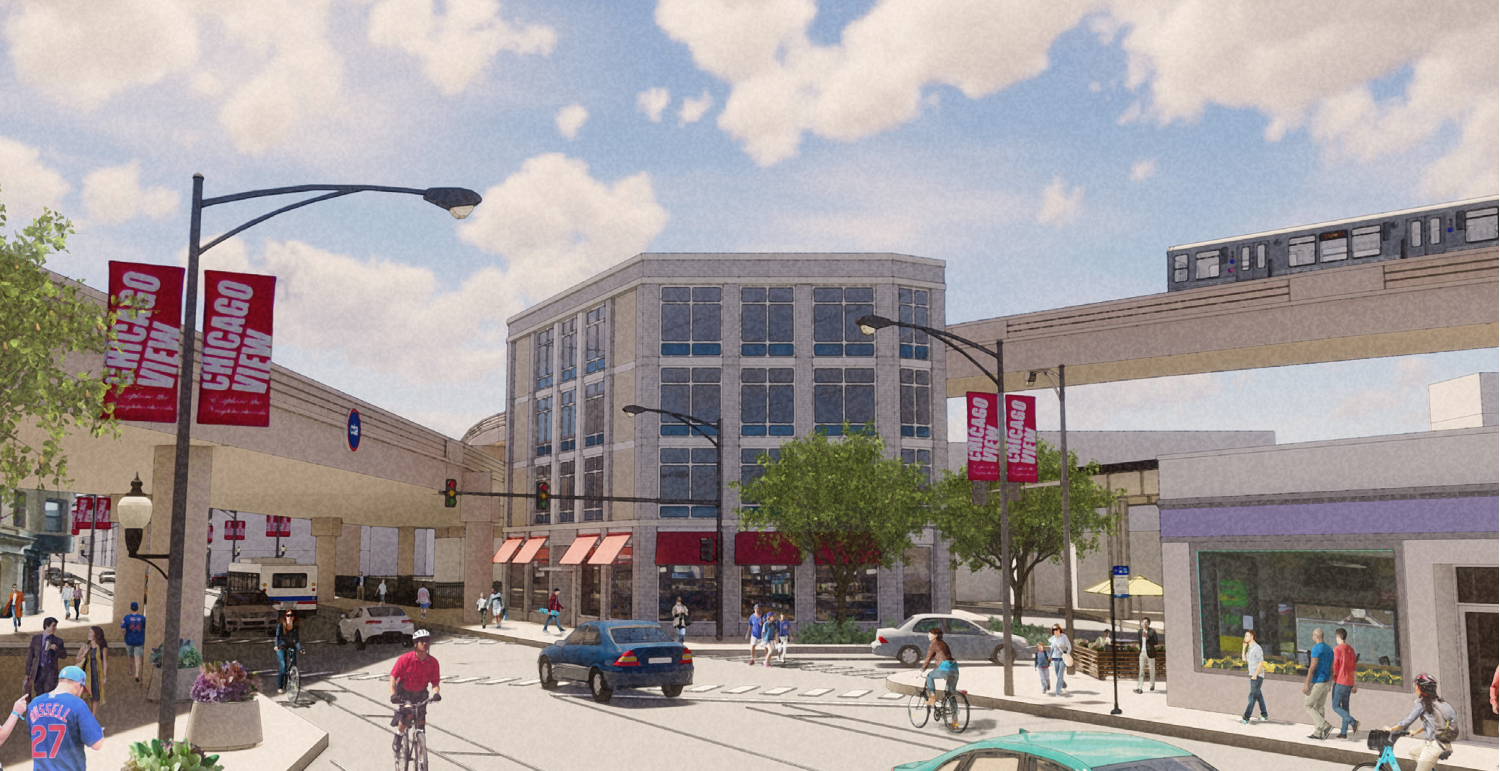
As part of planning for Phase One of the Red and Purple Modernization (RPM) program, CTA completed a TOD planning process with the community to inform future uses and scale of development on CTA-owned land that will no longer be needed at the conclusion of the project. These CTA-owned parcels near both the Red-Purple Bypass in the area of Belmont station and the Lawrence to Bryn Mawr Modernization will be strategically re-developed to best serve the surrounding neighborhoods.
Red Line Extension Transit-Supportive Development Plan
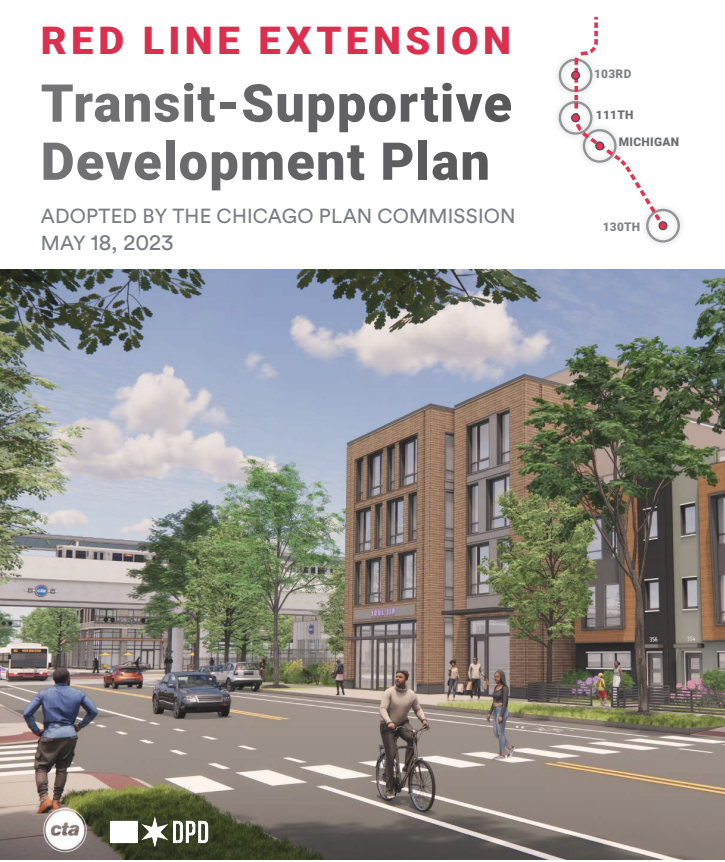
In conjunction with the Red Line Extension (RLE) project, CTA led the creation of a Transit-Supportive Development (TSD) Plan, which lays the foundation for development within a half mile of each RLE station, while also considering connections to activity hubs and destinations. Extensive community outreach was essential to the planning process to ensure each station area concept supported the community’s vision for balanced and equitable development. In May 2023, the RLE TSD Plan was formally adopted by the Chicago Plan Commission. In June 2025, the City of Chicago announced the winning development proposal of an RFQ process conducted for the large vacant lot at Michigan Avenue and 115th Street. The proposal will bring a $48 million investment, 58 affordable housing units, and 97,000 square feet of mixed-use retail just steps from the future Michigan Avenue station on RLE.
95th Street Corridor Plan
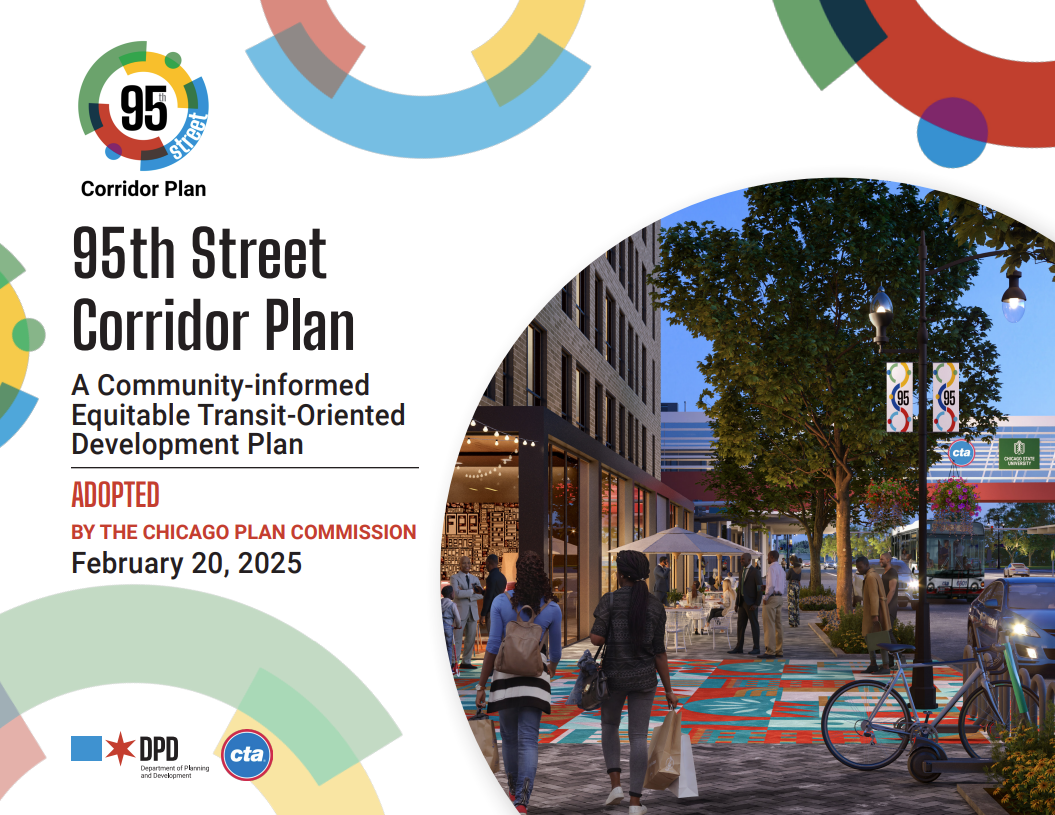
The 95th Street Corridor Plan is a community-led guide to foster equitable TOD along 95th Street between Halsted Street and Cottage Grove Avenue. This two-mile stretch of 95th Street ties together five major transit investment projects that collectively make it an ideal candidate for development growth that will support the current community and attract new visitors. The plan provides streetscape, land use, and development recommendations for the corridor, including concept development scenarios for four sites with major potential to catalyze ETOD. Two of the catalyst sites are directly adjacent to the 95th/Dan Ryan Red Line station, which serves as the primary transit hub for the Far South Side and a strategic location for TOD. In February 2025, the 95th Street Corridor Plan was formally adopted by the Chicago Plan Commission.
University Village 95
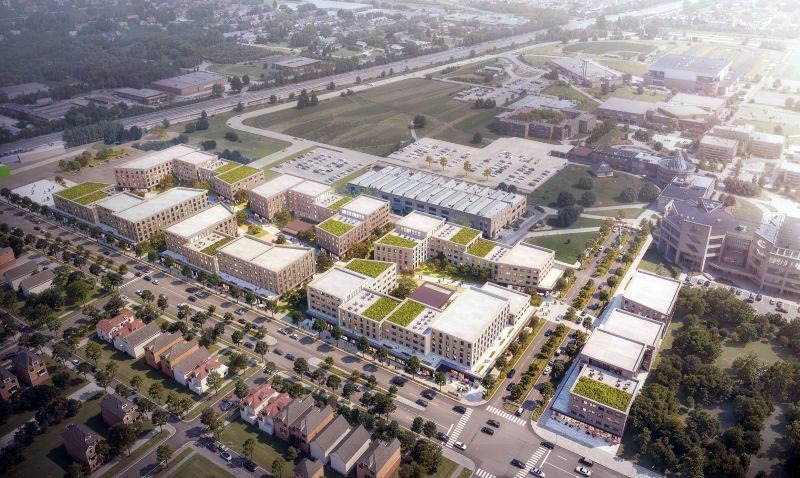
Feeding off the 95th Street Corridor Plan and a related 95th Street Corridor Development Framework Plan created by the university, Chicago State University (CSU) has issued an RFP for Phase 1 of University Village 95, a transformative mixed-use development opportunity located in the heart of Chicago’s South Side that will actualize CSU’s long-term vision to expand student housing and catalyze economic growth along the 95th Street Corridor. The University Village 95 site allows for approximately 232,000 square feet of new housing and retail construction on a two-acre site, of which the 95th Street Corridor Plan identified an unmet demand in the area.
RTA Joint Development Study
The Regional Transportation Authority (RTA) is undergoing a Joint Development Study that will assess opportunities for Service Board (CTA, Pace, and Metra) owned properties to generate new revenue and encourage equitable community-focused development aligned with transit goals. As a member of the steering committee, CTA provides oversight and feedback throughout the plan’s development. Phase 1of the study is currently underway which involves the inventorying of transit agency properties, evaluating their joint development potential, and researching peer agency best practices.
TOD projects
CTA supports many forms of TOD development around its system. This can include coordination with adjacent development, sale or ground lease of CTA or City-owned land, and reciprocal agreements that provide benefits to transit. Select projects include:
Metropolitan L Apartments
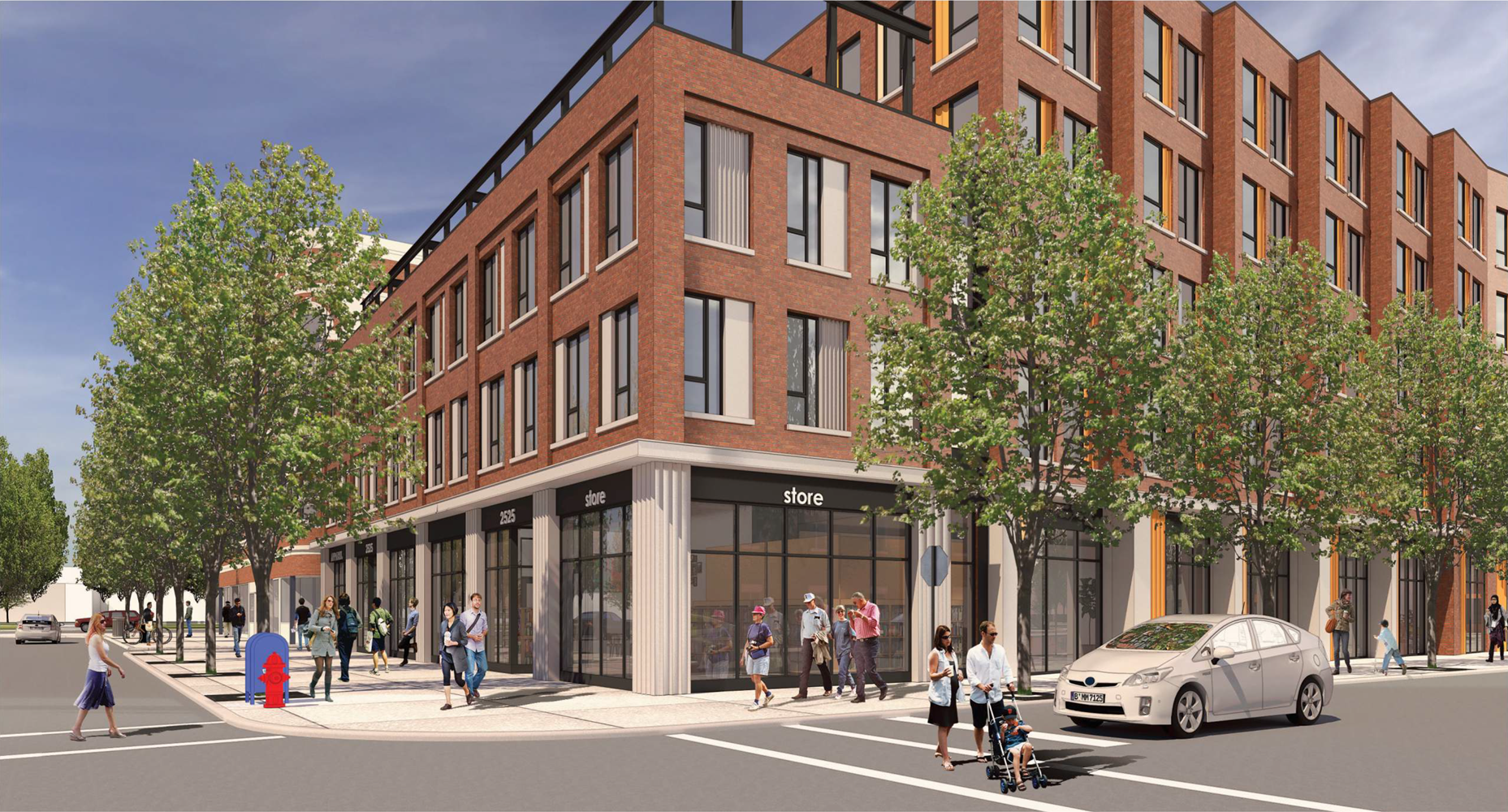
In 2022, CTA entered into a 99-year ground lease agreement with Bickerdike Redevelopment Corporation for affordable housing development at 2525 N Kedzie Blvd, the site of the original Logan Square station which operated from 1895 to 1970. This CTA-owned, 43,000-square-foot site will be converted to an 100% affordable equitable transit-oriented development which includes residential units, street-front retail, and community open space.
43 Green
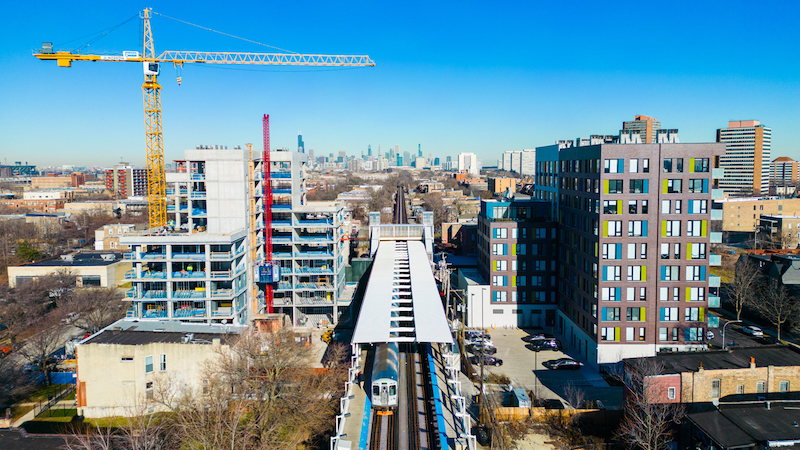
43 Green is a mixed-use commercial and residential development centered around the 43rd Green Line station at 43rd Street and Calumet Avenue. This $100 million, three-phase investment in Bronzeville will feature around 250 units upon completion, nearly half of which are affordable units, and locally owned retail. The P3 Markets-led project is considered one of the first equitable TOD projects on the South Side.
Lucy Gonzalez Parsons Apartments
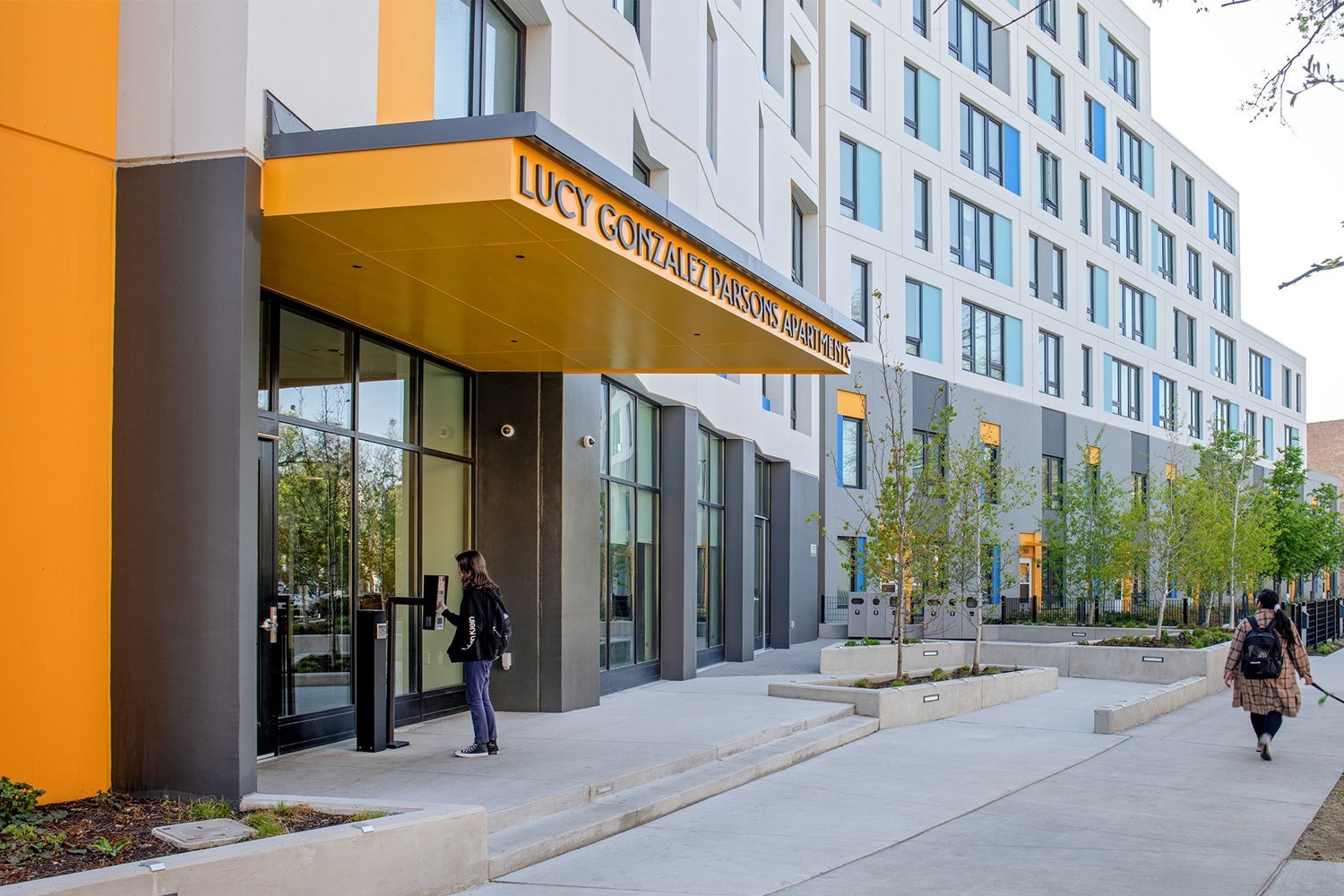
Lucy Gonzalez Parsons Apartments is a 100-unit affordable housing development built on a former parking lot steps from the Logan Square Blue Line station which offers 3-bedroom townhouses that cater to larger families. Half of the residential units are reserved for the Chicago Housing Authority (CHA) while the remainder are for families earning 60 percent or less of the area median income. The project was led by Bickerdike Redevelopment Corporation and opened in 2022.
Malcolm X College South Campus
In June 2025, the Chicago Transit Board authorized an agreement for the sale of vacant CTA-owned land adjacent to the Garfield Green Line station to the City Colleges of Chicago (CCC) for the development of Malcolm X College South Campus, a new health care-focused campus on the city’s South Side. This facility will support the continued revitalization of the Washington Park neighborhood and strengthens the longstanding partnership between CTA and CCC. This CTA-owned land was formerly used as a bus terminal. As part of the agreement, CCC will provide equivalent value of the property in tuition credits to CTA employees over a five-year period.
1Fifteen at Michigan Station
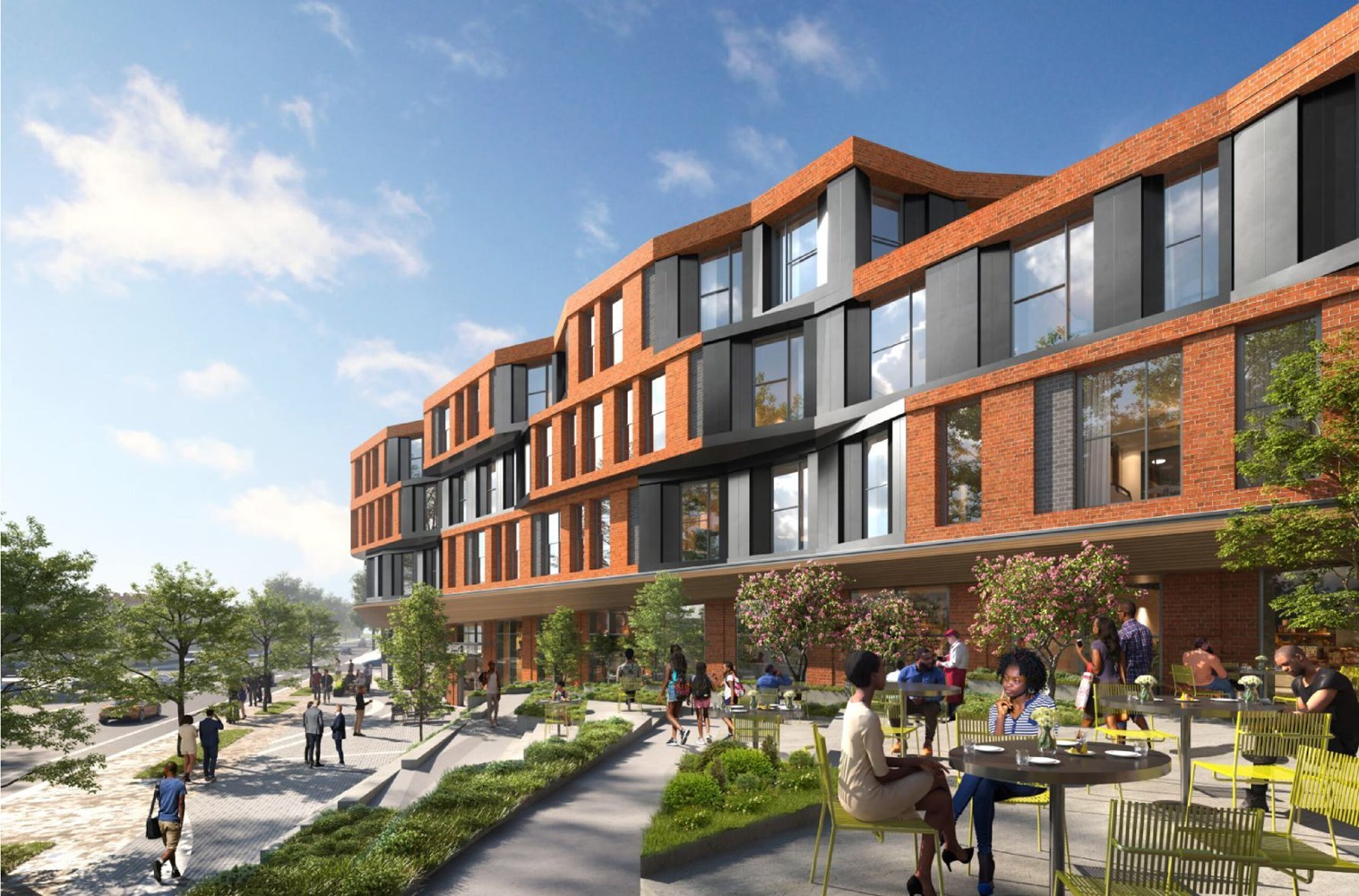
In June 2025, Mayor Brandon Johnson announced the winning respondent to a City of Chicago request for qualifications (RFQ) for development proposals on City-owned land at the southwest corner of 115th Street and Michigan Avenue, steps from the future Michigan Avenue station on the Red Line Extension (RLE). The project led by Chicago Neighborhood Initiatives will provide 58 affordable apartments and 23,000 square feet of retail commercial space, which is expected to include a grocery store, market hall for small businesses, and restaurant. Community partners include the Far South Community Development Corporation and Hope Center Foundation. The selected proposal will deliver on the vision outlined in CTA’s RLE Transit-Supportive Development Plan mentioned above, focusing new and inclusive mixed-use development around transit.
Ashland/63rd Park & Ride
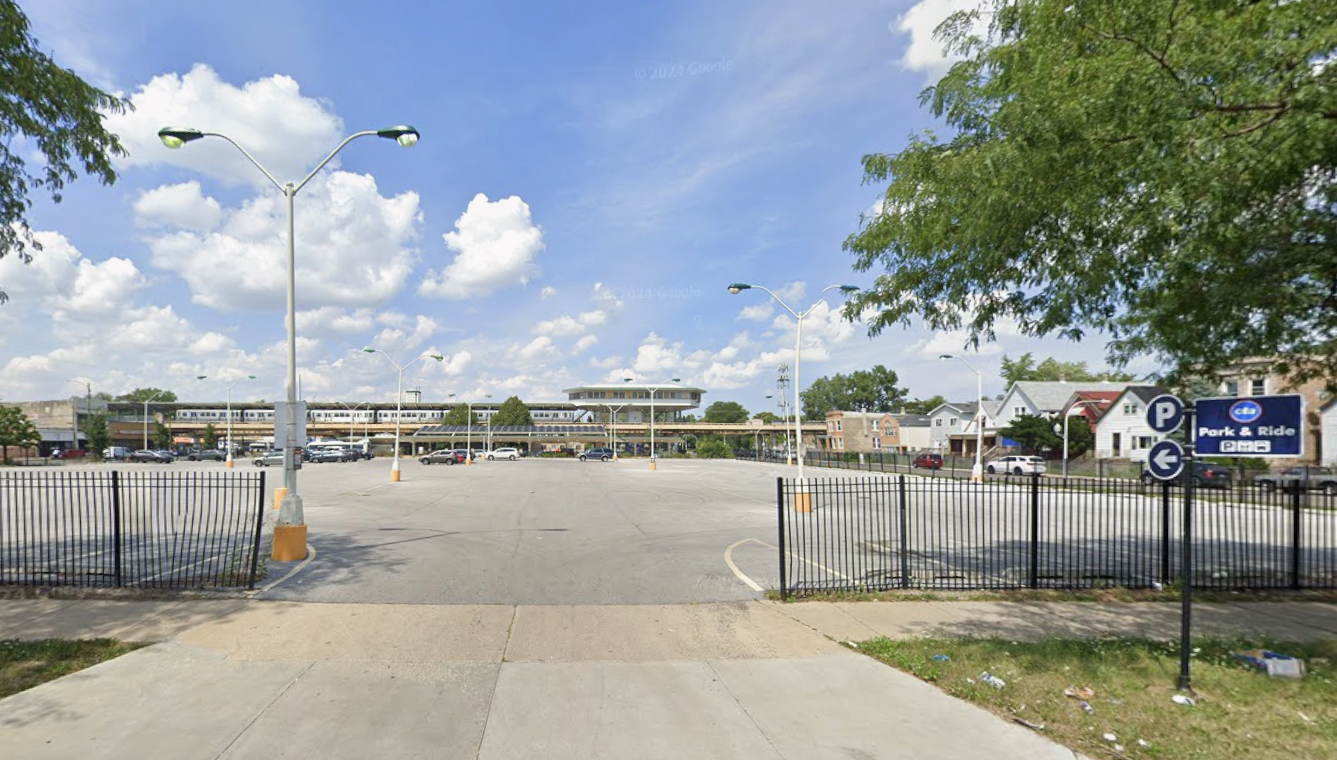
CTA is exploring the conversion of Park & Ride space at the Ashland/63rd Green Line station into future equitable TOD. Due to very low parking utilization rates amid a prime location in the heart of the West Englewood community, CTA and partners at the City of Chicago have identified this facility as a candidate for TOD to promote sustainable growth, community activation, and to increase transit ridership and utility. In collaboration with the City of Chicago Department of Development and Planning (DPD), an RFP was issued in October 2025 for the mixed-use redevelopment of the CTA-owned parking lot and eight City-owned parcels adjacent to the Ashland/63rd CTA Green Line Station and bus terminal. Ranging from approximately 21,350 to 115,000 square feet, the sites present a unique opportunity to generate new “missing middle” and transit-oriented housing with retail and active uses.
CTA Review of Planned Developments
CTA reviews major development proposals to ensure that transit impacts are adequately considered and to position transit access as the economic, environmental, and congestion solution. Since large, planned developments require detailed review from the City of Chicago due to their large footprint and complex site components, CTA makes sure to elevate the opportunity provided by mass transit in the site planning process. CTA collaborates closely with City departments and site developers on projects small and large including some of the most impactful recent proposals such as Bally’s Casino, the 1901 Project, and The 78.
Rail Station Concessions
CTA possesses dozens of retail concession spaces in rail stations across its system. However, many of them are currently vacant due to lingering impacts of the pandemic, much-needed capital repairs, and the historic focus on using these spaces solely for CTA revenue generation coming into conflict with a challenging commercial retail market. These concession spaces present the opportunity to serve CTA customers with a rider-friendly amenity that can improve the convenience of riding transit, leverage the high foot traffic of rail stations to offer business opportunities for local entrepreneurs and franchisees, and reinforces the role of the rail transit station as a community hub for Chicago neighborhoods and suburban communities. CTA is currently exploring innovative ways to fill concessions spaces within rail stations to prompt community and retail activation. CTA is pursuing a consultant partner to support market analysis and stakeholder engagement for an initial set of station retail spaces.
Expansion of CTA TOD capacity
CTA TOD staffing
Currently, CTA’s Planning, Infrastructure, Real Estate and Business Development Departments collaborate on TOD-related workstreams across the CTA service area. As CTA remains eager to expand its role in supporting TOD, CTA’s adopted budget for 2026 includes the agency’s first dedicated staffing for TOD efforts. By having staff focused solely focused on this topic, CTA can expand its reach and deliver new projects and programs working with stakeholders to enhance transit’s role in supporting community vibrancy and growth.