You spoke. We listened. In October we officially launched our new Safe Ride Specialist pilot program as part of our ongoing commitment to providing a safe and welcoming environment for all!
The pilot adds dedicated teams of non-law enforcement community partners across the Red, Blue and Green lines, bringing trained, compassionate outreach professionals into the system to meet riders where they are. This program helps every rider feel welcome, connects vulnerable riders to the support they need, and complements recent law enforcement investments.
About the pilot
Safe Ride Specialists work across the CTA system in dedicated pilot staging areas to help maintain a safe, welcoming, and respectful transit environment for everyone. Specialists are trained to provide compassionate care, riding in dedicated teams to engage with riders in need, connecting those in need to available services, and proactively addressing disruptive behavior before it escalates.
Specialists wear distinct, branded vests and are equipped with care kits and Narcan to provide immediate help.
The Safe Ride Specialist Program pilot program was developed collaboratively in partnership with riders and more than 30 mental health and social service experts, community organizations, and labor partners at CTA’s Transit Community Safety workshop held in August 2025.
What role do Safe Ride Specialists play?
Safe Ride Specialists serve two core roles:
- Crisis Intervention Specialists: Support riders experiencing mental health crises and substance abuse disorders by connecting them to treatment, housing, and social services.
- Community Violence Intervention Specialists: Engage youth and young adults to build positive relationships, de-escalate potential conflicts, and redirect energy into constructive behaviors.
When and where are Safe Ride Specialists working?
Safe Ride Specialists focus on the Blue, Red and Green lines, with particular staging locations and access points determined through rider and employee feedback. Specialists also have access to rest areas where they can safely engage riders connect them with wraparound resources. While the pilot zones are targeted to areas of highest need, riders and personnel across the entire system experience the benefits of the pilot program.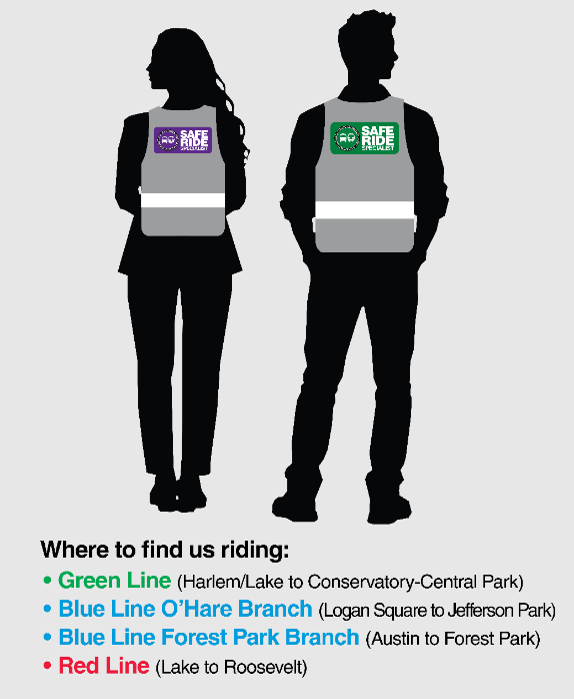
Where to find Crisis Intervention Safe Ride Specialists riding:
- Blue Line O’Hare Branch: Logan Square to Jefferson Park
- Monday-Friday, 9 a.m. – 5 p.m.
- Blue Line Forest Park Branch: Austin to Forest Park
- Monday-Friday, 6 a.m. – 2 p.m.
- Green Line: Harlem/Lake to Conservatory-Central Park
- Monday-Friday, 6 p.m. – 1 a.m., Saturday 6 p.m. – 11:30 p.m.
Where to find Community Violence Intervention Safe Ride Specialists riding:
- Red Line: Lake to Roosevelt
- 7 days/week, Noon – 3:30 a.m.
Partner agencies include Healthcare Alternative Systems (HAS), Street Samaritans, Housing Forward, and Metropolitan Peace Initiatives – a division of Metropolitan Family Services. Each organization brings significant outreach experience and a network of wraparound services that riders can directly access, including shelter beds, respite locations, mental healthcare, and much more.
How do Specialists work with law enforcement and CTA staff?
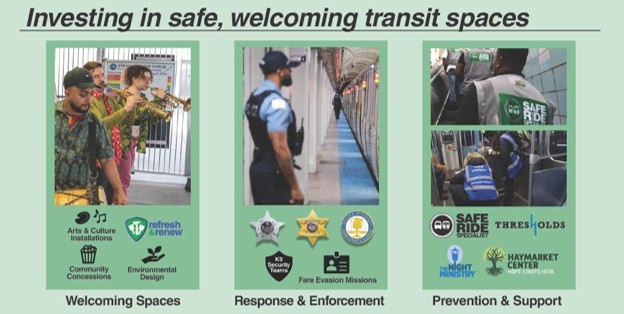
Wherever they are on the system Safe Ride Specialists assist law enforcement, CTA security teams and frontline staff. Specialists are the latest component to CTA’s multi-layered approach to system security, which was strengthened with the passage of the Northern Illinois Transit Authority (NITA) Act last fall. In 2026 CTA partnered with the Chicago Police Department and Cook County Sherriff’s Office to deploy additional officers across the system through data-driven missions, amounting to a 75% increase in monthly system policing hours.
How does the pilot fit in with CTA’s existing outreach and engagement initiatives?
The Safe Ride Specialist Program adds to our existing resources for unhoused riders on the 24-hour Red and Blue lines through a partnership with Chicago’s Department of Family and Support Services (DFSS).
Currently, Thresholds operates outreach teams on the Red Line during daytime, evening, and nighttime hours focused on mental health care, psychiatric support, and housing connections.
Haymarket Center deploys mobile outreach teams on the Blue Line to assist riders with substance abuse treatment, behavioral health services, and basic essentials. Haymarket operates 24/7 Monday through Friday as well as 7:00 am to 3:30 pm and 11:00 pm – 7:30 am on Saturday and Sunday.
The Night Ministry sets up physical outreach hubs at the Howard Red and Forest Park Blue line stations on Wednesday and Thursday nights, respectively, to provide healthcare, food, hygiene supplies, and case management.
How is the pilot program funded?
The total cost for the pilots is $9.6 million and is supported by previously allocated funds under the CTA budget with additional funding authorized by the RTA Board in May after the passage of the NITA Act.
How is the pilot being evaluated?
During the one-year pilot, CTA measures program effectiveness through various key performance indicators, such as incidents de-escalated without the use of law enforcement; reduction in service delays; improved safety for front line personnel and riders; and connections to needed wraparound resources. These indicators are evaluated to determine the future of the program and help inform the regional safety initiatives being led by NITA.
More info