Public transit is often at the crossroads of issues impacting the communities we serve.
The CTA, like other shared public spaces, is not immune to the impacts of the opioid crisis. Overdose deaths remain a major public health emergency not just in Chicago and Cook County, but nationwide.
As part of a broader, community-wide response to this epidemic, we have partnered with regional public health agencies—Cook County Health (CCH) and the Chicago Department of Public Health (CDPH)—to make Naloxone (commonly known by the brand name Narcan) available at six (6) key locations across the rail system as part of pilot programs.
By making these life-saving resources available at our rail stations, we are saving lives, supporting regional efforts to tackle this crisis, and delivering on our commitment to providing a safe travel environment for all riders.
Making an Impact:
- 3,400+: Total number of life-saving naloxone kits dispensed in the first six-months of the Cook County Health vending machines pilot (Sep. 2025-Mar. 2026).
- 6,873: Total number of health products dispensed out of the 95th/Dan Ryan CDPH Health Vending Machine in 2025
- Opioid-related overdose fatalities in Chicago dropped 33% from 2024-2025*
* Preliminary info for 2025 from CDPH
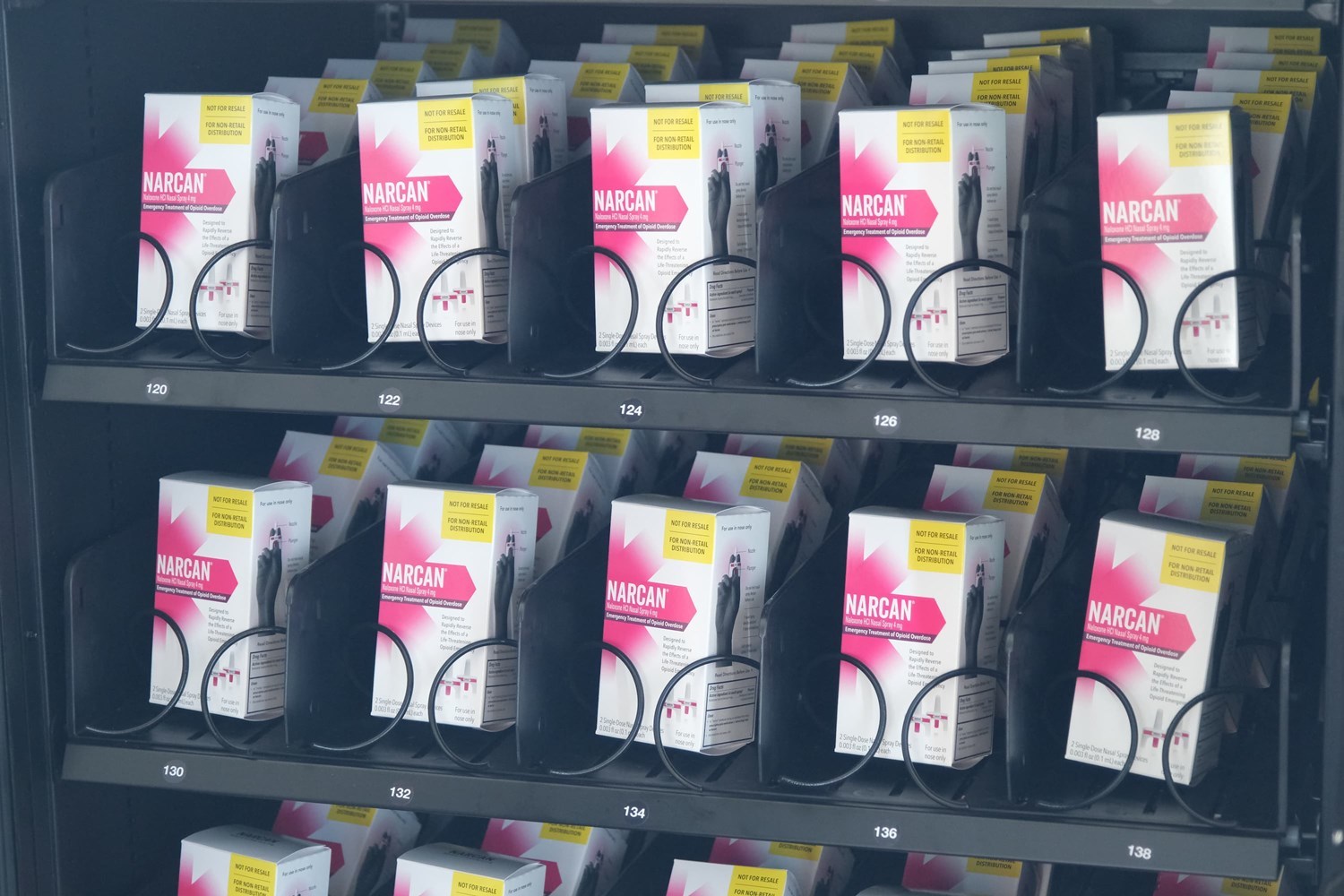
Vending Machine Locations
Vending machines providing free naloxone are currently available at the following CTA rail stations:
- 47th Red Line
- Wilson Red/Purple Line
- Jefferson Park Blue Line
- Harlem/Lake Green Line
- Central Park Pink Line
- 95th/Dan Ryan (North Terminal Building) Red Line*
*Facility is equipped with a CDPH Health Vending Machine, offering Narcan and other harm reduction products.
Locations were selected based on data showing higher rates of opioid-related emergency medical responses, along with feedback from community partners.
How to Use the Naloxone Vending Machines
The machines are free, easy to use, and available during station operating hours.
The machine at 95th/Dan Ryan is different from other locations, so be sure to always follow the on-screen prompts for dispensing the free naloxone.
How to Administer Naloxone
If you believe someone may be experiencing an opioid overdose follow these 6 steps:
- Call 911 immediately if someone shows any of the following signs of an overdose:
- Bluish purple, grayish, ashen, pale, or clammy skin
- Limp body
- Loss of consciousness
- Blue or purple lips or fingernails
- Vomiting, gurgling noises, choking, or death rattle
- Unresponsive or unable to speak
- Slow or stopped breathing
Naloxone works best when emergency medical help is on the way.
- Check responsiveness. Try to wake the person by calling their name or gently shaking them.
- Administering Naloxone.
- Remove the Naloxone nasal spray from the package.
- Tilt the person’s head back and insert the nozzle into one nostril.
- Press the plunger firmly to release the dose.
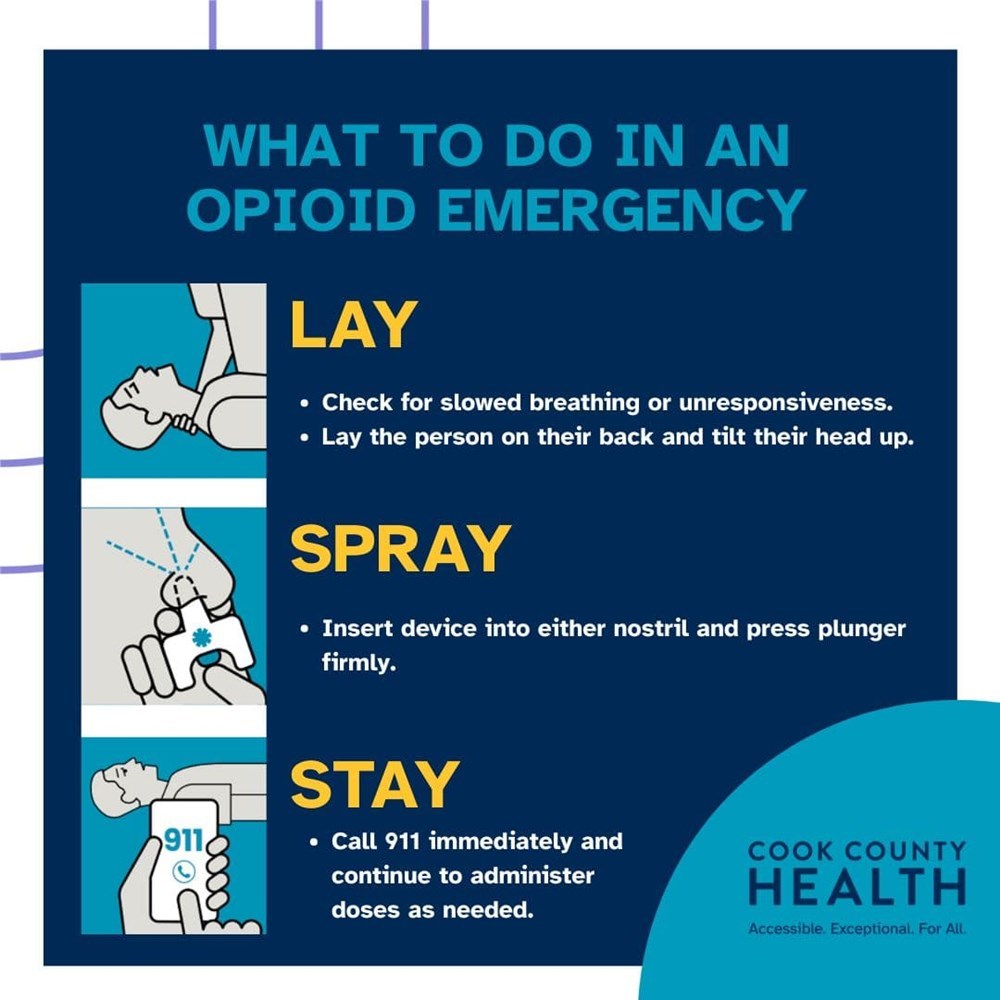 Monitor and support. If the person does not respond within 2–3 minutes, administer a second dose if available and continue to wait for emergency responders.
If the person is not breathing:
- Provide rescue-breathing
- Make sure mouth is clear
- Tilt head back, lift chin, pinch nose
- Give 1 breath every 5 seconds
- Stay until help arrives. Naloxone is temporary and can wear off. Medical evaluation is critical, as such all involved are encouraged to stay until paramedics arrive.
- Report it. We also ask that anyone report when they administer naloxone at Illinois Saves Overdose
About our Public Health Partnerships
We are working closely with the Chicago Department of Public Health (CDPH) and Cook County Health (CCH) to pilot Naloxone vending machines in select rail stations. These partnerships allow us to serve as a bridge between transit and public health, helping connect people to life-saving tools while removing barriers to access.
CCH is piloting five public health vending machines across the system that provide free Naloxone in areas with higher opioid-related emergency responses.
CDPH’s public health vending machine at the 95th Street Red Line station contains Naloxone and other harm-reduction products which are accessible 24 hours a day, seven days a week, ensuring continuous access to life-saving medication and supplies.
Together, these partnerships support our ongoing efforts to balance safety, public health, and customer experience while recognizing that substance use is a larger societal issue that extends beyond transit.